


As teams move from human-led delivery to vibe coding and agentic engineering, software creation accelerates faster than humans in the loop can manually verify and control. The new bottleneck is monitoring the human-to-human and human-to-agent decisions that keep faster work aligned, unblocked, and trustworthy.
The operating shift: from slow coordination to fast control
Software development is not moving from humans to machines in one clean jump. It is moving from human-led delivery to a human-centered production system surrounded by more automation: coding agents, test agents, browsers, CI/CD systems, observability tools, issue trackers, support channels, and release workflows all participate in delivery, but humans still clarify intent, resolve ambiguity, approve risk, coordinate handoffs, and remain accountable for outcomes.
Before AI-assisted development, engineering work was slower and more human-driven. That created inefficiency, but it also gave teams time to keep up. Humans wrote most of the code, carried most of the context, and moved work across product, design, engineering, QA, DevOps, and support at a pace where managers and leads could generally see what was happening. Control existed almost as a byproduct of slowness. The main problem was that coordination was inefficient and delivery was slow.
Control existed almost as a byproduct of slowness.
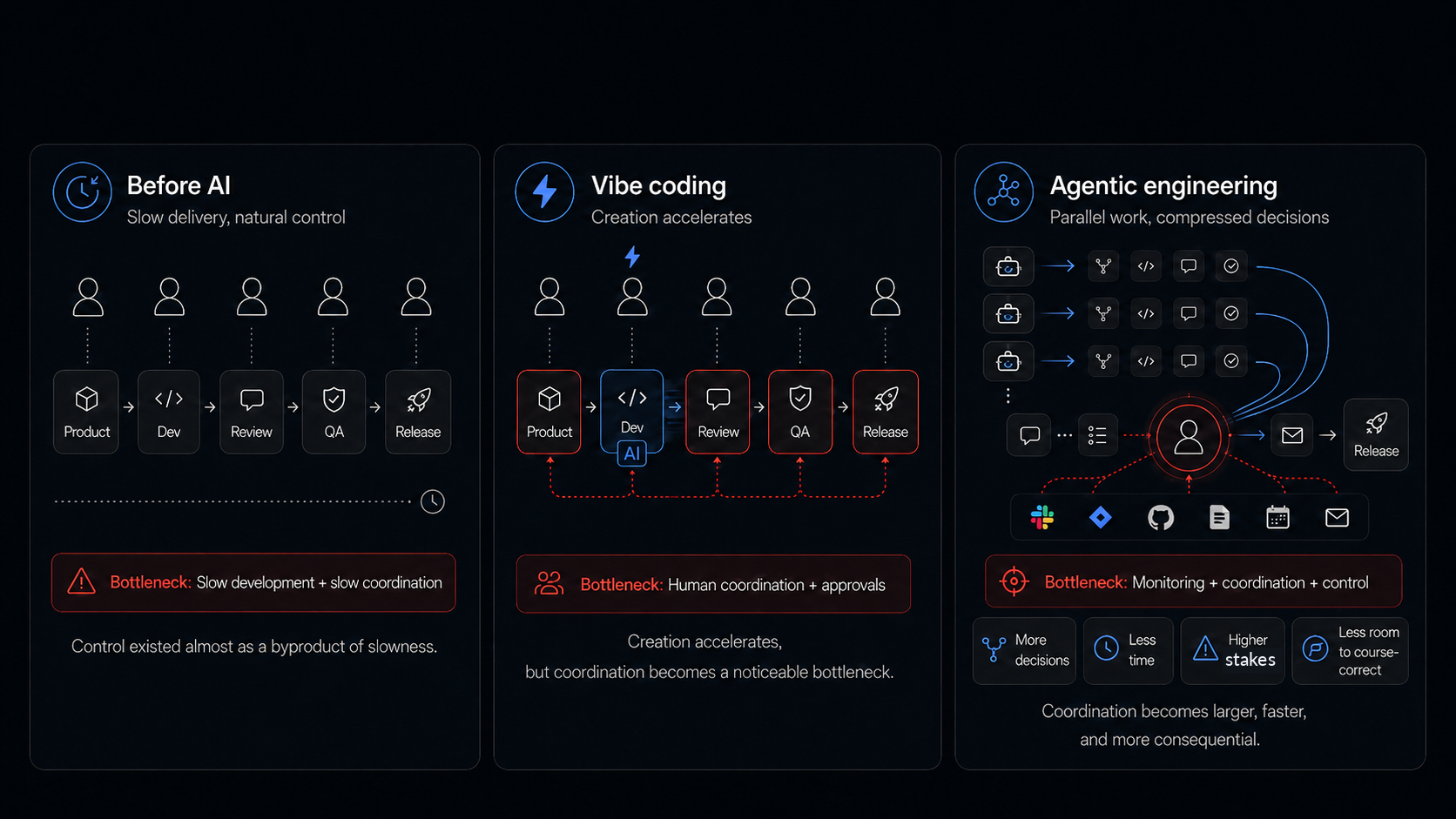
Figure 1. How software bottlenecks evolve as delivery accelerates. Slow delivery gave teams time to keep up. Faster delivery turns coordination into a monitoring and control challenge.
Vibe coding changes that balance. One person can now produce more code, more patches, and more implementation attempts in less time. But the surrounding human work - clarifying intent, reviewing output, coordinating across teams, validating behavior, deciding what is truly done, and communicating release impact - does not speed up at the same rate. Creation accelerates, but coordination becomes a noticeable bottleneck.
The next bottleneck is not just code generation. It is the human operating layer around faster work.
Agentic engineering amplifies the mismatch. Agents can generate far more workstreams, pull requests, traces, summaries, validation artifacts, questions, and approval requests in a compressed window of time. Many of the most important interactions will still happen in the same tools teams already use today: Slack, Jira, Linear, GitHub comments, meetings, email, docs, support tools, and release channels. Those tools were designed for human-paced collaboration. In the agentic era, they will be stress-tested by higher volume, faster handoffs, more automated outputs, and higher-stakes decisions.
That means teams will face more decisions, less time to make them, greater impact when decisions are wrong, and less opportunity to course-correct once the system has moved. Coordination becomes larger, faster, and more consequential - and that is when monitoring and control become as important as automation itself.
This creates two related problems that should not be collapsed into one: making agents better at execution, and monitoring the human operating layer around that execution.
Last-mile verification: the factory between vibe coding and agentic engineering
Vibe coding works surprisingly well because the human stays close to the loop. A person can describe what they want, inspect the generated code or UI, open the app, click through the relevant paths, notice awkward behavior, remember the business context, and decide whether the result is good enough. The AI accelerates creation, but the human still supplies the general-purpose verification layer.
That is also why the jump from vibe coding to agentic engineering is harder than it first appears. To make development truly agentic, teams need to automate much more than code generation. They need systems that can deploy a change, open the product in a browser, click through real workflows, inspect screenshots and traces, read logs, compare behavior against requirements, understand product intent, detect awkward or incomplete outcomes, and route feedback back to the right agent or human.
This is the last-mile verification problem: the gap between “the system generated something” and “the organization can trust that the work is correct, complete, and safe to move forward.”
For humans, this last mile is natural. Humans bring eyes, judgment, company context, customer memory, product taste, and common sense. They can notice that a button technically works but feels wrong, that a test passed but the wrong customer path was exercised, or that the implementation matches the ticket but misses the Slack clarification that changed the real requirement.
For agents, all of that has to be made explicit. The team has to build or adopt a verification factory: environments, browser automation, screenshots, traces, logs, behavioral specs, acceptance criteria, product knowledge, business rules, escalation policies, and feedback loops. Without that factory, agentic development stalls at the same place vibe coding does: a human still has to look at the output and decide what is true.
This is why monitoring and control become central. If the system is going to move faster than humans can manually track, teams need checkpoints that inspect the right evidence at the right time, decide whether the work is moving in the right direction, and route feedback to either an agent or a human. Creating those checkpoints in a reliable, automated way is non-trivial.
The industry now has two layers to solve
The challenge now splits into two related but different layers. Both matter, but they are not the same problem.
The first is the agent-execution layer. This is about making agents better at doing and verifying work inside their own lane: automated deployment, sandboxed execution, browser snapshots, test generation, trace inspection, product-context retrieval, and agent-to-agent feedback loops. Hyperscalers, coding platforms, DevOps platforms, and AI infrastructure companies are likely to invest heavily here because this layer is required to make agentic development fast and reliable.
The second is the human operating layer. This is the human-to-human and human-to-agent work that still happens across Slack, Jira, Linear, GitHub comments, docs, meetings, support channels, release workflows, and customer-facing handoffs. This layer includes clarifying intent, changing requirements, reviewing evidence, deciding whether proof is sufficient, coordinating handoffs, escalating blockers, approving risk, and preserving accountability.
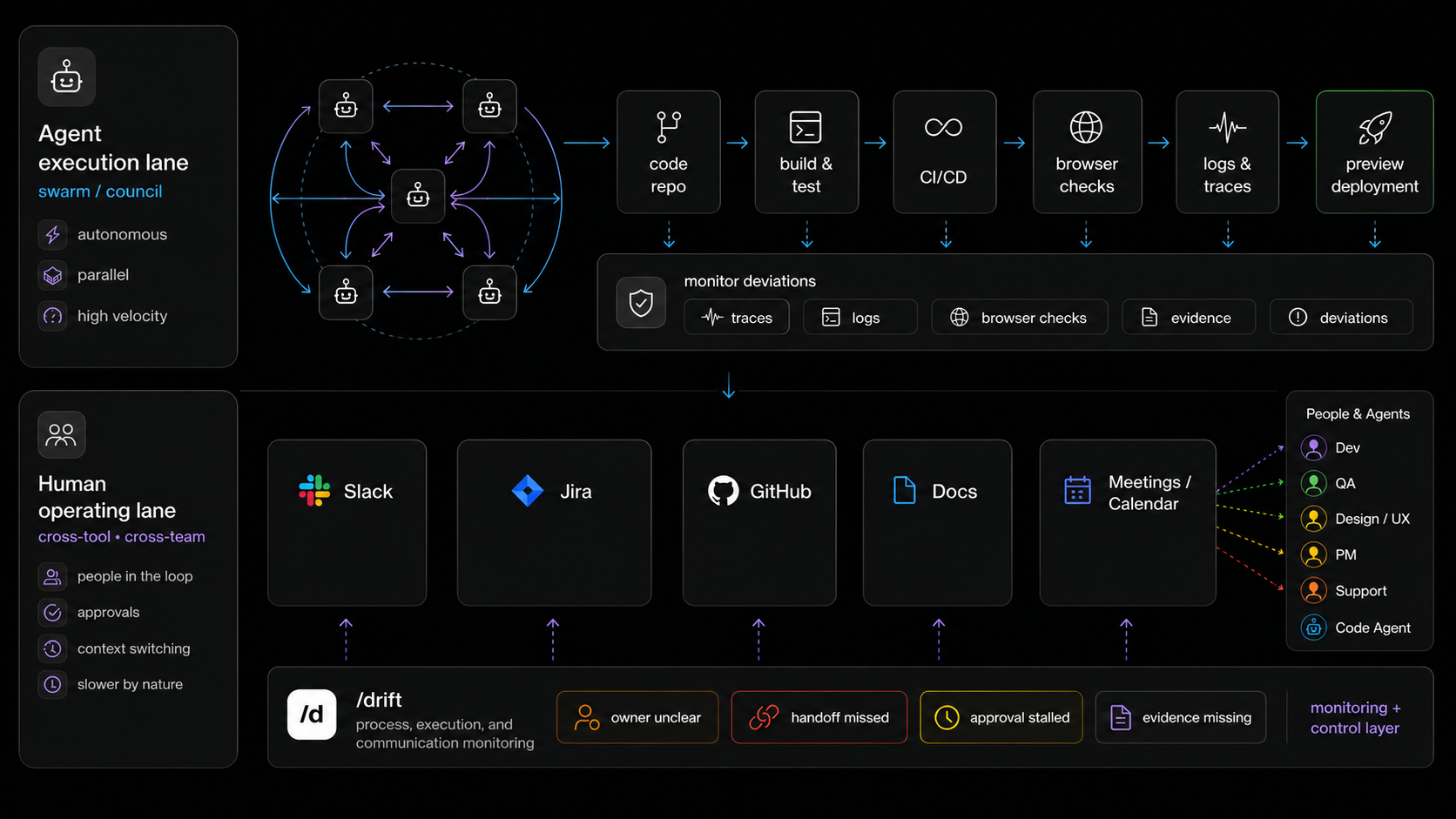
Figure 2. Agentic engineering creates two distinct operating layers.
The agent-execution lane accelerates work through code, tests, CI/CD, browser checks, logs, and previews. The human operating lane remains where intent, handoffs, approvals, and accountability move across existing tools.
The first layer asks: can agents execute and verify more work autonomously? The second asks: can the organization still understand, coordinate, and control the human decisions around the high velocity agentic work?
Where this leaves us: building the monitoring layer around accelerated work
The shift from human-led delivery to vibe coding to agentic engineering is not simply a story about faster code. It is a story about faster work moving through an operating system that was originally designed for human-paced coordination.
High-velocity agentic development will require monitoring and control in at least two places. The first is the agent-execution lane: the machine-native layer where agents plan, write, test, browse, inspect logs, generate traces, and coordinate with other agents. The second is the human operating lane: the cross-tool, cross-team layer where people clarify intent, change requirements, review evidence, approve risk, handle exceptions, coordinate handoffs, and remain accountable for outcomes.
Both layers matter. Without stronger monitoring and control in the agent-execution lane, autonomous development will stall at the last mile of verification. Without stronger monitoring and control in the human operating lane, accelerated software work will overwhelm the people and teams who still need to make decisions, resolve ambiguity, and keep delivery aligned with business intent.
At /drift, our current focus is the second layer: the human-to-human and human-to-agent operating layer across the tools engineering teams already use — Slack, Jira, GitHub, docs, meetings, support channels, and release workflows. This is where ownership gets unclear, handoffs get missed, evidence gets thin, approvals stall, and important context gets trapped between people, tools, and teams.
That is the piece of the puzzle we are focused on now: helping engineering teams monitor process, execution, and communication as software delivery accelerates. Automation will make more work possible. Monitoring and control will determine whether that work stays aligned, trustworthy, and accountable.
We are also watching the agent-execution layer closely. As hyperscalers, coding platforms, and infrastructure providers continue to mature that layer, we expect more standardized protocols, traces, artifacts, and interfaces to emerge. As that happens, there may be natural adjacencies for /drift to explore — but the immediate focus is the human operating layer around faster work.
The companies that win with agentic engineering will not merely produce more code. They will build stronger monitoring and control systems around faster work — across agents, humans, and tools.